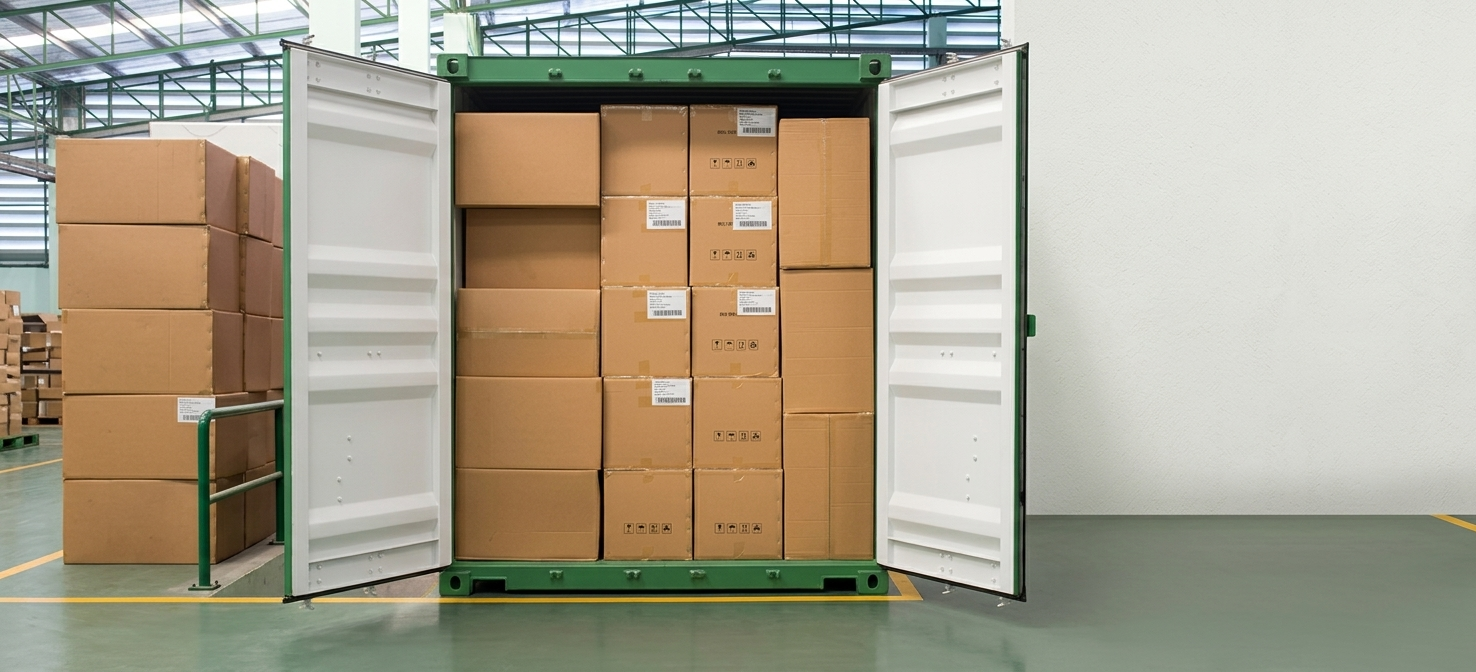
Container unloading is one of the most labor-heavy tasks in a warehouse. Two to four workers, two to four hours, for every container that comes through the dock. Most operations run this task every day. Few have looked hard at what it actually costs.
This calculator gives you a baseline. Enter your operation’s numbers and see your current annual labor spend on container unloading, and what you keep if the robot handles the physical work.
containers
€
Eligible annual spend Assumes a conservative 85% of your containers are eligible for robot unloading. -
containers
hours
people
Manhours per container 9 manhours
€ /hr
Eligible manhours -
Eligible annual labor cost Assumes a conservative 85% of your containers are eligible for robot unloading. -
ROBOT COVERAGE
hours
days
Containers per robot per year -
Annual savings -
Check your inbox.
Something went wrong. Try again.
What the calculator shows
Two input modes. If your contractor charges a flat fee per container, use that tab. If you pay workers by the hour, use the hourly rate tab. Both arrive at the same thing: your annual spend on container unloading, limited to the containers the robot can handle.
The robot coverage section shows how many containers one robot can process per year, given your warehouse hours and days. It also shows your annual savings as a range. The lower number assumes the robot takes 3 hours per container. The upper number assumes 2 hours. Both are realistic depending on your container mix and layout.
The savings figure is your current labor cost for those containers, minus the RaaS fee at €96k per robot per year. The calculator finds the number of robots that gives you the best savings, not the most coverage.
Why container unloading is worth automating
Container unloading is physically demanding. Workers lift and carry cartons at height for hours at a stretch. Injury rates in unloading are high. Turnover in the role is even higher. The people willing to do it are getting harder to find.
At the same time, the task is highly repetitive. Every carton comes from the same place (the container) and goes to the same place (a conveyor or pallet). The physical variation is manageable. Robots handle it well.
That combination, high labor cost, poor working conditions, consistent task structure, makes container unloading a strong automation target. The labor savings are real and large. The implementation does not require redesigning your dock.
What to do with the number
If the annual savings figure is larger than you expected, the next step is a conversation about pricing. Robot-as-a-Service (RaaS) means no capital outlay. You pay a monthly fee. If that fee is lower than your current labor cost for those hours, you are cash-flow positive from the start.
If the number is smaller than expected, check your inputs. Operations that undercount workers (not including the people who sort, check, or stack after unloading) often find the real figure is two to three times the first estimate.
See the robot handle your containers.
Talk to us and we will walk through the numbers for your specific operation.