Most ROI calculations on automation are incomplete.
The standard model: add up the hardware and implementation cost, divide by annual labor savings, get a payback period. Under three years, green light. Otherwise, shelved.
That model misses a lot.
The implementation is itself a cost
Traditional automation takes 6 to 12 months to implement. A team of specialized engineers and consultants comes to your facility. Your floor plan freezes, and the operations get pauzed or moved until it’s done.
During those months, you’re paying for the new system while your throughput drops. Most models calculating the ROI include the capital cost. Almost none account for months of operational disruption on top of it.
Labor costs go deeper than wages
The standard justification: X workers at Y salary equals Z annual cost. Automate those tasks and you save Z per year.
But what’s harder to put in a spreadsheet is the cost of labor you don’t have. Recruiting warehouse workers is slow and expensive. During peak season, you often don’t have time to recruit at all. A bad month of labor shortage costs more than a full year of the wages you were trying to reduce.
On top of that, companies reliant on manual labor are harder to scale because output grows with headcount. That affects how investors and acquirers price the business. A company where output scales with machines has more predictable unit economics and lower operational risk.
Removing the dependency on hiring cycles and regional labor markets is really valuable, but it rarely shows up in the calculations.
Automation is also a sales tool
We spoke last week to a large logistics company. They lost a major contract to a competitor. The reason: the competitor had automation and they didn’t. The customer chose the automated operation, because it showed higher reliability. And a forward-looking business likely to remain viable in the coming years.
For any company selling a service, 3PLs, contract manufacturers, fulfillment centers, automation should be part of your pitch. If your competitors are automated and you aren’t, you’re not in a good place.
That lost revenue belongs in the model, too.
Systems stop fitting the operation
Traditional automation gets screwed into the floor. Shuttle systems, conveyor belts, and fixed robotic cells are built for one set of products, one workflow. But when something changes, like new customers, new SKUs, different packaging, the system gets stuck. You work around it, pay consultants to reconfigure it, or replace it.
We see this a lot. Companies end up with infrastructure that no longer fits how they operate. These systems cost a couple of million euros to install. Removing them costs nearly as much. In some cases, buying a new warehouse and starting over is cheaper than demolishing what’s already in place.
That risk rarely shows up in the original model, but it should.
Robot-as-a-Service
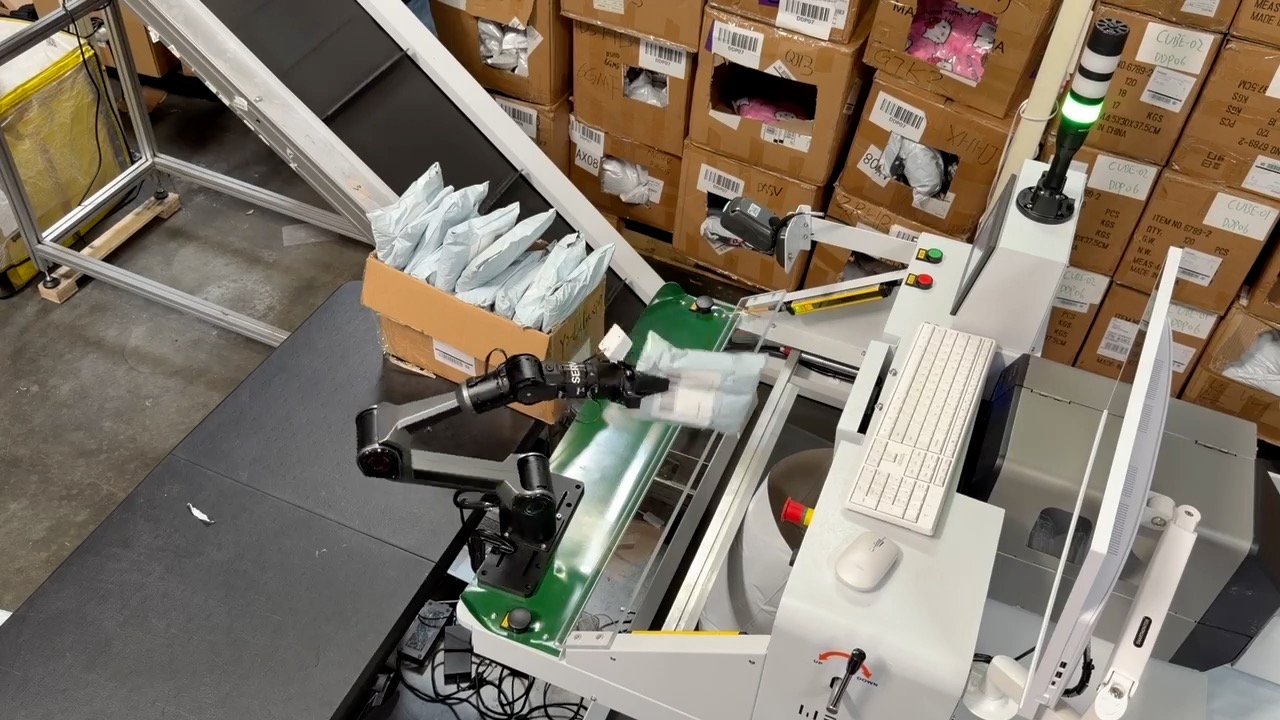
Robot-as-a-Service (RaaS) replaces the capital investment with a monthly fee. No multi-million payment upfront, and no five-year payback horizon to wait out.
If the monthly fee is lower than what you were paying in labor for those tasks, you’re cash-flow positive from day one. When operations change, you’re not sitting on a sunk cost. The system adapts. You move on.
What a complete model looks like
When you evaluate automation, your model should include:
- Implementation time and operational disruption, not just capital outlay
- Recruiting and retention costs for the employees
- The cost of labor shortages, especially during peak periods
- Revenue at risk if your competitors automate before you
- Reconfiguration costs
- Whether a RaaS structure improves your cash-flow profile versus a capital purchase
For context on which warehouse tasks AI robots handle today and how they compare to fixed installations, see the task breakdown.
The payback period matters. But only if the inputs are complete.